


Running a small business in today’s digital world can feel overwhelming. You pour your heart into building your brand, posting on social media, updating your website, and trying to stand out online. Yet, despite all your efforts, your business still doesn’t appear on Google when people search for your services.
Sound familiar? You’re not alone. Most small business owners face this exact challenge because they create content without a clear direction or strategy. They write blogs, upload pages, and hope something will work, but without understanding what their audience truly needs or what Google values, those efforts rarely bring real results.
That’s where a well-planned SEO content strategy makes all the difference. It’s not just about adding keywords; it’s about creating valuable, relevant, and optimized content that helps you connect with your local customers and earn Google’s trust.
In this guide, we’ll explore how to build an effective SEO content strategy for small businesses — one that’s practical, beginner-friendly, and proven to increase your online visibility, drive organic traffic, and help your business grow sustainably and beyond.
What Is an SEO Content Strategy?
An SEO content strategy is a structured plan to create and publish content that aligns with your target audience’s search intent and Google’s ranking factors. For small businesses, it means crafting blog posts, service pages, and local content that help your website appear in search results when potential customers are looking for what you offer.
According to HubSpot, businesses with a consistent SEO content plan generate 67% more leads than those without one. That’s because quality, optimized content builds trust with search engines and positions your brand as an expert in your field.
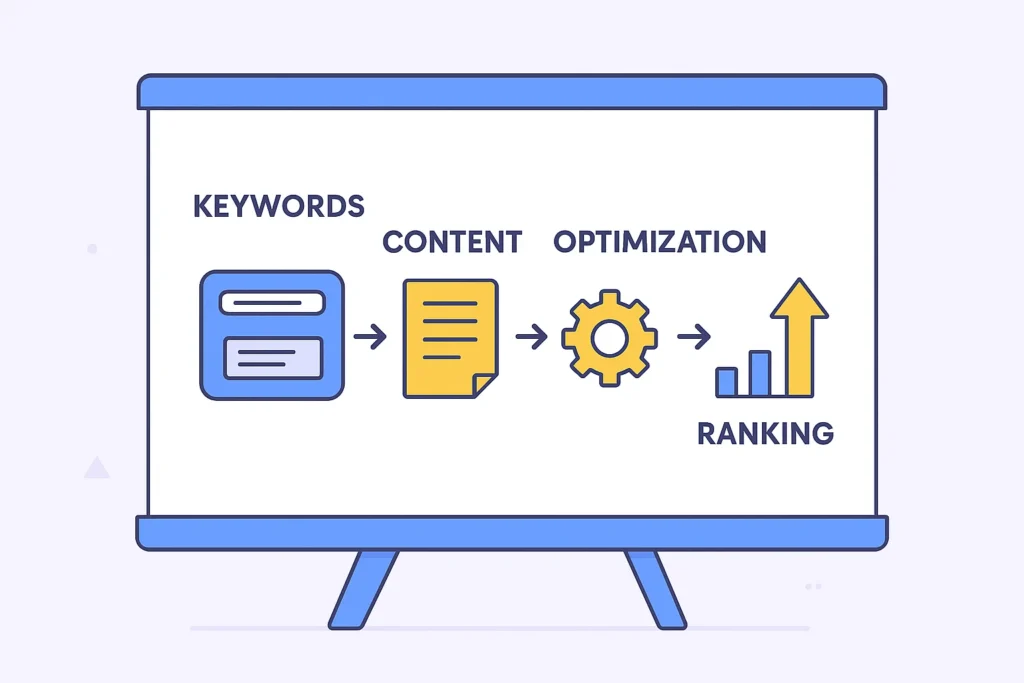
Why Small Businesses Need an SEO Content Strategy
Small businesses often operate with limited marketing resources, so every blog post or page must count. Without a clear SEO content strategy, your content may go unnoticed, failing to attract traffic or convert visitors into customers. By focusing on targeted keywords, search intent, and local SEO, you can reach the right audience, grow your authority online, and drive sustainable business growth.
Step 1: Conduct Keyword Research for Small Businesses
Every great content strategy starts with understanding what your customers are searching for. Use keyword tools like Ahrefs, SEMrush, or Google Keyword Planner to find terms related to your products or services.
If you want to learn keyword research with practical steps, be sure to read our complete guide to keyword research for small businesses
Focus on long-tail keywords such as:
- best SEO practices for small business websites
- How to plan SEO-friendly content
- local SEO content strategy for small businesses
These keywords usually have less competition and higher conversion rates.
Pro Tip: Don’t just chase high-volume keywords. Focus on user intent — what problem your customer wants to solve. This helps you create content that answers real questions and boosts your click-through rate (CTR).
And if you want to understand the complete SEO framework and implement it for your small business, be sure to check out our all-in-one SEO resource for entrepreneurs.
Step 2: Plan a Content Marketing Calendar
Once you have keywords, plan your publishing schedule with an SEO content calendar.
This keeps your content consistent, which is key for building trust and improving your domain authority over time. You can use tools like Trello, Notion, or Google Sheets to organize ideas, topics, and deadlines.
A good content optimization strategy ensures every post is written for both people and search engines — not one over the other.
Example:
- Week 1: “SEO tips to grow small business website traffic”
- Week 2: “Local SEO strategy for small businesses”
- Week 3: “How to optimize your blog posts for SEO”
4. Step 3: Create High-Quality, SEO-Friendly Content
Now it’s time for execution — writing content that ranks and engages.
Use clear headings (H2, H3) and short paragraphs (3–4 lines).
If you want to make sure your content is Google-friendly, our complete on-page SEO checklist for small businesses will be very useful for you.
Make your articles helpful, friendly, and data-driven. Include facts, examples, and actionable tips.
For instance, use SEO copywriting tips like:
- Include your main keyword naturally in your meta titles and descriptions.
- Add relevant internal and external links.
- Optimize images with alt text.
- Use on-page SEO optimization techniques like header tags and schema markup.
Remember: Google rewards content that shows experience and expertise (E-E-A-T) — so demonstrate your knowledge with real examples, case studies, or results.
Step 4: Optimize for Local SEO
If you serve a specific area, a local SEO strategy is essential.
- Create or update your Google Business Profile (GMB).
- Add local citations (business listings on directories like Yelp, Bing Places, etc.).
- Write location-based blogs (e.g., “Best SEO Services in [Your City]”).
- Use geo-specific keywords to attract local customers.
To improve your local rankings, you can also follow these top practical local SEO tips — they are very helpful for small businesses
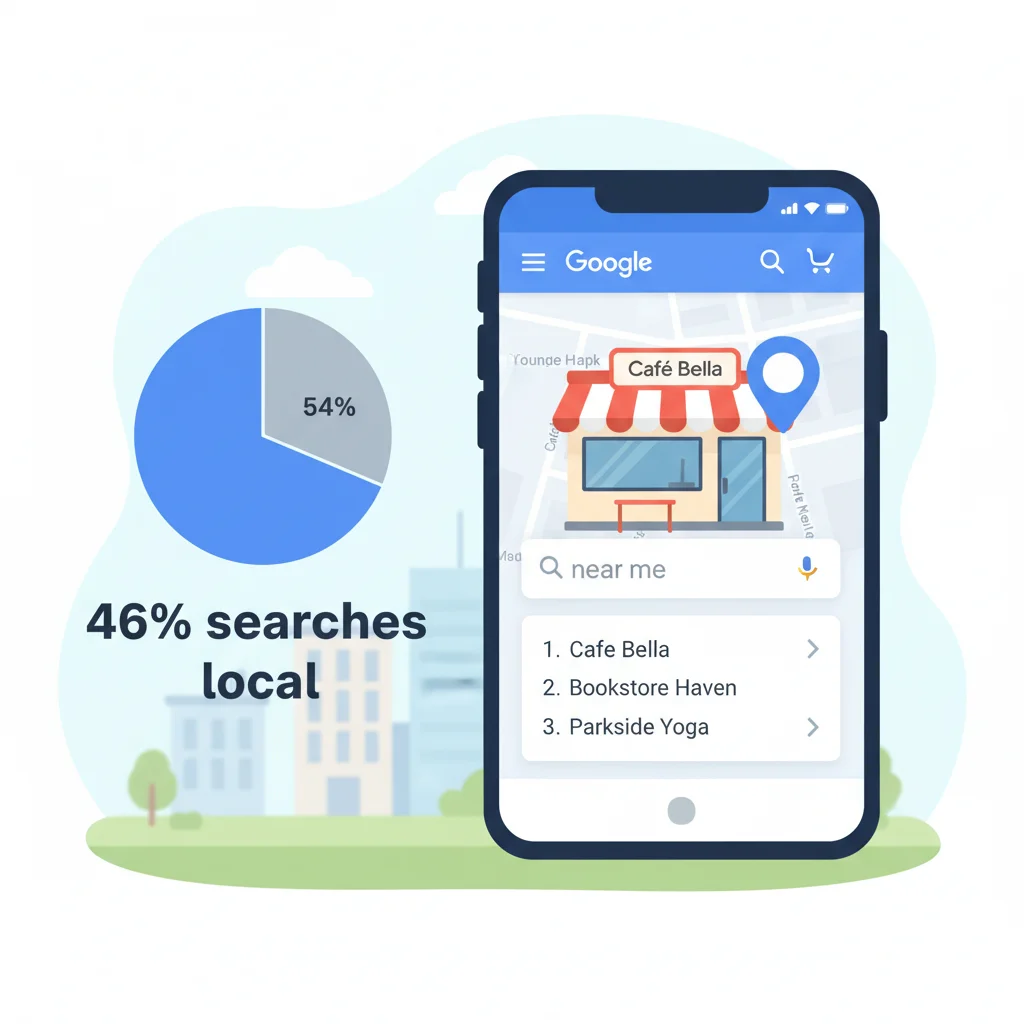
Local SEO helps your business appear in Google Maps and “near me” searches — boosting visibility right where your customers are searching.
According to BrightLocal, 46% of all Google searches are for local information. That means if you’re not optimizing locally, you’re missing nearly half of your potential customers.
Step 5: Track, Measure, and Improve Content Performance
SEO isn’t a one-time task — it’s an ongoing process.
Use tools like Google Search Console and SEO audit tools to track how your pages perform. Check:
- Which keywords bring the most clicks
- What your CTR (click-through rate) looks like
- How your backlinks affect your domain authority
Evaluate your content performance metrics regularly. Update older posts with new data, images, or examples to improve content performance over time.
This data-driven approach helps you identify what works — and where you need improvement.
Step 6: Build Authority with Backlinks and Trust Signals
To increase website authority, focus on earning high-quality backlinks from relevant, trustworthy websites.
Guest posting, collaborations, and digital PR can all help. Additionally, make sure your site is:
- Mobile-friendly
- Uses HTTPS (secure)
- Loads fast
- Built on a reliable content management system (WordPress, Wix, Squarespace)
These factors not only help your SEO but also build trust with search engines and users alike.
Step 7: Adapt Your Strategy for Voice and AI Search
More users will be searching via voice assistants like Siri and Alexa. That means optimizing for voice search is now part of an effective SEO content strategy.
Write content in a conversational tone (like answering questions). Add FAQs with natural phrasing, for example:
“How can small businesses improve online visibility?”
This makes it easier for search engines to match your content with voice queries.
Bonus Tip: Use Data to Drive Every Decision
Don’t rely on guesswork — use data.
Tools like Google Analytics, Ahrefs, and SEMrush can help you understand what topics perform best and which ones bring conversions.
Using a data-driven SEO strategy ensures every piece of content you publish has a purpose to attract, engage, and convert your audience.

Conclusion: Build a Sustainable SEO Content Strategy That Works
Creating an Effective SEO Content Strategy for Small Businesses isn’t about writing random blogs, it’s about building a system that delivers consistent results.
By understanding user intent, publishing quality content, optimizing for local SEO, and measuring your performance, you’ll be able to:
- Drive organic traffic
- Improve online visibility
- Build authority and trust
- Grow your small business online
Remember, SEO is a long-term investment, not an overnight success. But with the right strategy, the results are worth it. Ready for online growth? Start SEO for your small business and see the results.

Ready to Take Your Small Business SEO to the Next Level?
At GlobalRankWeb, we help small businesses build powerful, ROI-focused SEO strategies that actually deliver results — more traffic, more leads, and long-term visibility.
Whether you need SEO content planning, keyword research, or a complete SEO content marketing strategy, our team provides proven, data-backed solutions tailored to your business.
If you’re ready to scale your online presence and stay ahead of competitors, now is the perfect time to take action.
Contact Our Team and start your growth journey with GlobalRankWeb — where your success becomes our strategy.
FAQs
1. How often should small businesses publish SEO content?
Small businesses don’t need to post daily. Publishing 2–4 well-researched and optimized pieces per month is more than enough to see steady SEO growth. The key is consistency. When Google sees that you publish helpful content regularly, it starts trusting your website more, which improves your rankings over time.
2. What type of content works best for small business SEO?
The content that performs best is the kind that solves customer problems. This includes how-to guides, local service pages, FAQs, comparison posts, and blog articles that answer common questions. When your content provides value and matches real search intent, Google is more likely to rank it higher, especially for local searches.
3. What is the biggest mistake small businesses make in SEO content?
The biggest mistake is publishing random blogs without a strategy. Many small businesses skip keyword research, search intent analysis, and on-page optimization, which results in low traffic and poor rankings. An effective SEO content strategy ensures every article has a purpose and targets the right audience.
4. How long does it take to see results from an SEO content strategy?
Most small businesses start seeing noticeable improvements within 3–6 months, depending on competition, niche, and content quality. If you post consistently, optimize properly, and focus on user intent, you may even see quicker results. SEO is long-term, but it delivers sustainable growth.
5. Why is local SEO important for small businesses?
Local SEO helps your business show up in Google Maps, local search results, and “near me” queries. This is crucial because most customers prefer buying from nearby businesses. By optimizing your Google Business Profile, adding local keywords, and creating area-specific content, you attract people already looking for services in your location.
6. How can small businesses make their SEO content more user-friendly?
Small businesses can make their SEO content more user-friendly by using simple language, short paragraphs, clear headings, and real examples that readers can relate to. Adding visuals, internal links, and FAQs also improves readability. When users stay longer and engage with your content, Google sees this as a positive signal, which helps your pages rank higher.


