


If you run a small business and want more local customers — people right in your city, neighborhood, or nearby — then you’re exactly where you should be. In this article, you will discover:
- What local SEO really means and why it’s a total game-changer right now
- Practical step-by-step actions you can start doing today
- Smart tips, fresh trends, and upcoming changes so you stay ahead of your competition
- How to track your progress, measure results, and keep improving
I’ll keep things simple and natural, like we’re chatting over coffee. No jargon overload, no fluff. If you’re also curious about broader SEO strategies for small businesses, check out my small business SEO guide. It’s packed with actionable tips. Everything here is updated for what’s working right now in the SEO world. Ready? Let’s begin!
What is Local SEO & Why It Matters
Local SEO is all about making your business appear when people nearby search for what you offer. Think of search phrases like “coffee shop in Islamabad”, “best plumber near me”, or “flower shop in my area”. When someone types this, your business should show up — that’s the power of local SEO.
Here’s why local SEO is super important right now:
- Most people use smartphones and search for local businesses while out and about.
- Google often shows a map pack — a map with 3 local business listings — when it detects a local search.
- If your business is in that map pack, chances are more people will call you, visit your shop, or click your website.
- It’s much more cost-effective than broad advertising, because you’re targeting only people near you.
To back it up: 88% of consumers who perform a local search on mobile either call or visit a business within a day.
Also, local “near me” searches have surged: over the past few years, “near me” searches have increased by 500%+.
The local SEO scene is evolving, too. Google is leaning more on AI summaries, intent, and generative features to answer questions.
So you can’t just rely on old tricks. You need strategies that are local, smart, and future-forward. For more actionable tips, check out my local SEO strategies guide for small businesses.
The Local SEO Cheat Sheet — Step by Step
Below is your updated and slightly more expanded cheat sheet — still bite-sized steps and friendly tips, but with a little extra explanation so you see why they matter. You can follow them one by one, or pick and start doing whichever fits your time and resources today.
1. Claim & Optimize Your Google Business Profile (GBP)
This is the absolute foundation of your local SEO. If your Google Business Profile isn’t claimed and well-optimized, most of your other efforts will struggle to show up.
- Claim your business on Google Business Profile (formerly Google My Business).
- Verify it — via mail, phone, email, or other methods Google allows in your area.
- Complete every field thoroughly: business name, full address, phone number, hours, services or products, high-quality photos, and a clear description.
- Write the description using your main local keywords naturally (don’t force them; keep it readable).
- Choose correct categories & subcategories so Google knows exactly what your business offers.
- Post frequently: share updates, offers, events, and new photos via GBP posts.
- Add strong images: interiors, exteriors, your team, your products, or finished work. Visuals help users trust you more.
- Use and monitor the Q&A section: answer users’ questions, and even pre-seed common ones to guide potential customers.
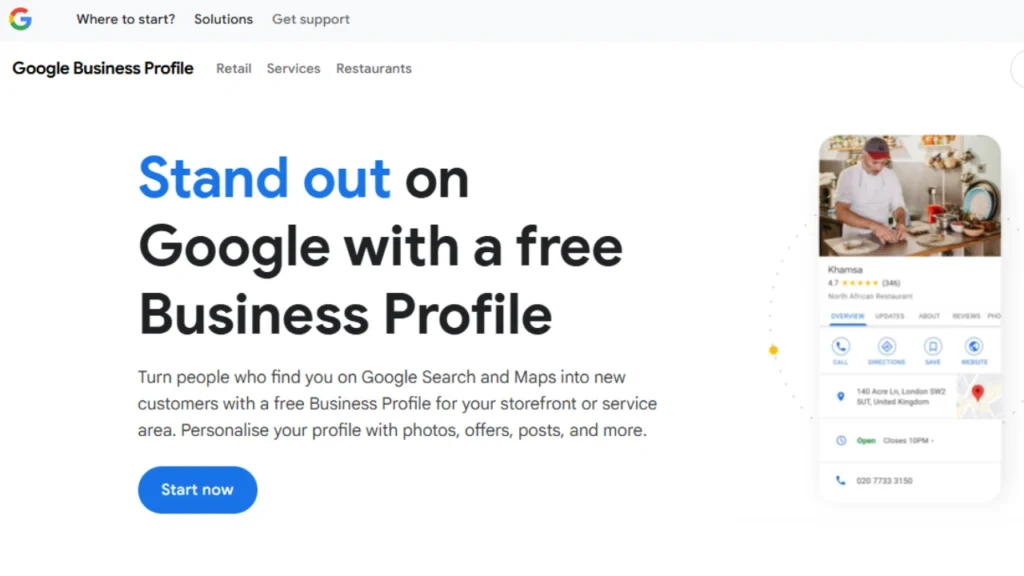
Why this matters:
Your GBP is one of the strongest signals Google uses in local rankings — especially for the “map pack.” Google judges based on Relevance (how well your profile matches the search), Distance (how close you are to the searcher), and Prominence (how well known or trusted your business is online).
Also, a well-filled profile helps with visibility, engagement, and trust. Businesses with good GBP profiles often receive more clicks, calls, and overall attention.
2. Ensure NAP Consistency Everywhere
NAP stands for Name, Address, Phone number — three simple pieces of info, but they play a huge role in local SEO.
- On your website (header, footer, contact page), always display your NAP in the same format.
- On all directory listings, social media profiles, and local business directories — make sure the NAP is exactly the same: same spelling, punctuation, abbreviations, etc.
- If your business ever moves, changes phone number, or rebrands, update immediately everywhere.
- Even small differences (like “St.” vs. “Street”, or missing area code) can create confusion for Google and customers.
- Run regular audits to find and fix inconsistent listings.
Why it matters: search engines use NAP consistency to verify that your business is real and reliable. Inconsistent NAP data weakens trust signals and can hurt your rankings.
3. Do Local Keyword Research
To rank locally, you need to speak the language of your local customers.
- Brainstorm services + your city/neighborhood (e.g., “roof repair in Islamabad”, “kids dance class in F-6”).
- Use tools like Google Keyword Planner, Ubersuggest, or Ahrefs Keyword Generator to estimate search volume and check competition. If you want a full walkthrough, see my small business keyword research guide for step-by-step instructions.
- Check Google’s “People also ask” and “related searches” to uncover more ideas.
- Look at your competitors’ service pages and see which local keywords they use.
- Focus especially on long-tail local phrases — they tend to be less competitive and more specific (for example, “best ac repair in G-11 Islamabad”).
- Remember voice search: people often say natural phrases like “Hey Google, find a bakery near me” — so make your content more conversational to match that.
4. Optimize On-Page SEO for Local Searches
Once you have your keywords, it’s time to weave them smartly into your pages.
- Title tags & meta descriptions: include a local keyword + city name.
- Headings (H1, H2, etc.): insert location phrases naturally (e.g., “Plumbing Services in Islamabad”).
- Body content: talk about your city or service area organically — don’t force it.
- URL slugs: make them simple and local (e.g., yourwebsite.com/ac-repair-islamabad).
- Internal linking: link from your homepage or blog to service pages using local anchor text.
- Contact/location page: embed a Google Map, list your full address, phone, hours, directions.
- Schema markup / structured data: Use the LocalBusiness schema so Google better understands your business.
- Performance & mobile friendliness: make sure pages load fast and are usable on smartphones, because Google is mobile-first.
5. Create Location / Service Landing Pages
If you serve more than one area or city, these pages help you rank locally in each region.
- Make a landing page for each area or city you serve (if applicable).
- Keep content on each page unique — don’t just copy & change city names; write fresh.
- Include local testimonials or client examples from that area.
- Use local images or references (landmarks, neighborhoods) so people and Google see the connection.
- This shows Google that your business is not just broad, but relevant to each locale you target.
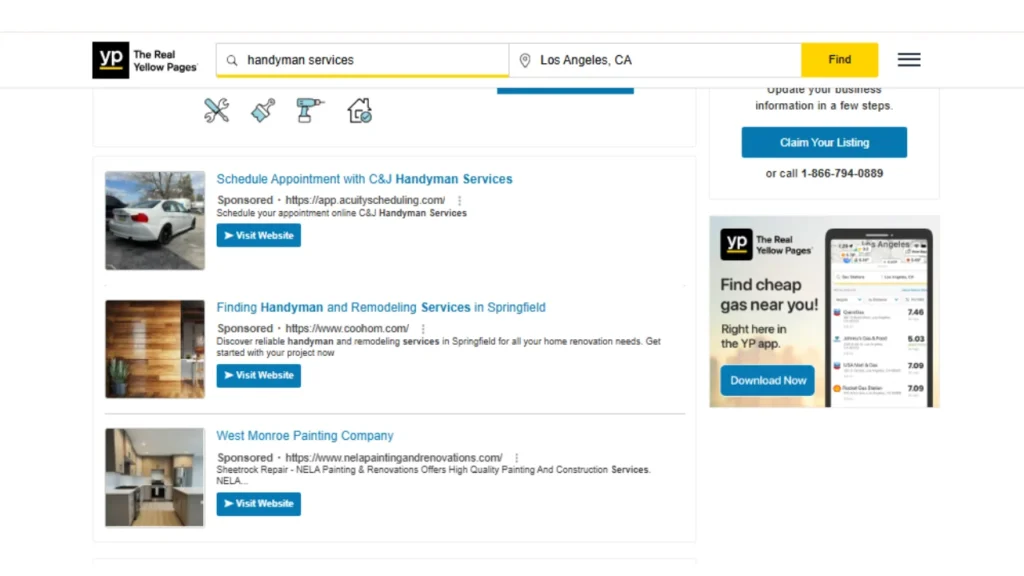
6. Get Local Citations & Directory Listings
Citations = your business details (name, address, phone) listed on other sites.
- Submit your business to trustworthy local directories (city directories, chamber of commerce, Yellow Pages).
- Use niche directories in your industry (e.g., for plumbers, health, and restaurants).
- Always check NAP consistency in each listing.
- Avoid spammy or low-quality directories — they can hurt, not help.
- Periodically audit your listings and remove or fix duplicates or incorrect entries.
These citations improve your business’s “prominence” in local search.
7. Encourage & Manage Customer Reviews
Reviews are powerful. They influence both people and Google.
- Ask satisfied customers to leave reviews (especially on Google).
- Make it easy: send a direct link or clear steps to leave a review.
- Respond to all reviews: thank the good ones and handle the negative ones politely and constructively.
- With permission, use review quotes on your website.
- Display recent reviews on your GBP and website.
- More positive, recent, and relevant reviews help local rankings and build trust.
8. Build Local Backlinks & Partnerships
Links from reputable local sites raise your authority.
- Reach out to local bloggers, news sites, and community organizations, and ask for mentions or links.
- Sponsor or partner with local events, charities, or groups — they may list you.
- Work with neighboring or complementary businesses and exchange mentions (if it makes sense).
- Guest post on local or industry blogs. You can also learn more about getting high-quality links in my small business backlink guide.
- Create content others want to link to (local guides, “top things to do in your area,” case studies).
Local link building is still a strong signal in 2025.
9. Use Fresh & Local Content
Active websites perform better.
- Publish blog posts or news about local topics — events, changes in your industry locally, customer stories.
- Announce seasonal offers, holiday specials, and new services.
- Keep using your local keywords in content.
- Share stories about customers or projects (with their permission).
- Use real photos from your shop, your area, your team.
- Fresh content tells Google “this business is alive.”
10. Optimize for Voice, AI, & Generative Search
The future is here — searches are getting smarter and more conversational.
- Use natural, conversational language so you match voice queries.
- Use question–answer format (e.g. “How much does cleaning cost in Islamabad?”) to target common queries.
- Aim for featured snippets/answer boxes — give clear, concise answers.
- Learn about Generative Engine Optimization (GEO) / Answer Engine Optimization (AEO) — optimize your content so AI tools may pick it as an answer.
- Use schema markup, structured data, good headings — AI tools like structured content.
- Keep an eye on Google’s AI Overviews or other AI search features — test how your content performs.
11. Track Metrics & Optimize
You must look at what’s working and what’s not — otherwise you’re just shooting in the dark.
Key metrics to track:
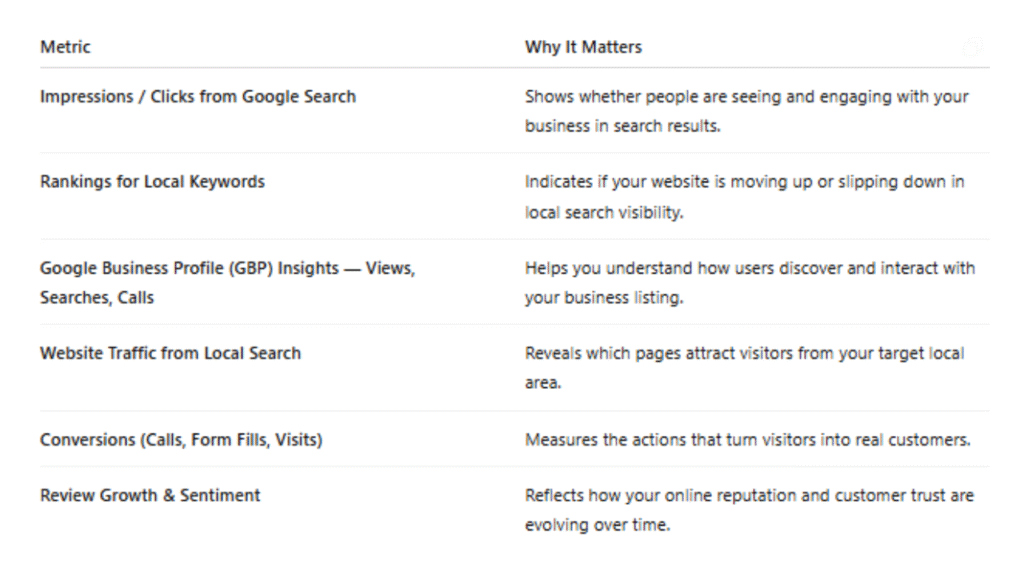
Use tools like Google Analytics, Search Console, and GBP insights dashboards to gather this data.
Also, do audits now and then: find weak pages (low traffic, low engagement), fix or update them, remove broken links, and refresh content with new information or keywords. If you’d like professional help improving your site and getting better results, check out our SEO services for small businesses.
Common Mistakes to Avoid
- Overstuffing keywords unnaturally
Trying to cram your target keyword into every sentence makes content unreadable and spammy. Instead, use your keyword smartly and mix in related words so your writing sounds natural. Google may penalize keyword stuffing. - Ignoring negative reviews or leaving them unanswered
People notice when you respond—or don’t. If you ignore unhappy customers, it hurts your reputation. Respond politely to all reviews (good or bad). Show that you care and are responsive. - Having inconsistent NAP across listings
If your business name, address, or phone number differs in directories, your website, or maps, Google and customers get confused. Always keep your NAP identical across every listing. - Copying content across location pages (duplicate content)
If you have pages for different cities or neighborhoods, don’t just copy the same text with a different city name. Duplicate content dilutes your SEO. Make each page unique, with local details. - Building links from spammy sites
You want backlinks, yes—but from good sites. If your website gets links from poor, irrelevant, or spammy websites, it hurts your profile more than it helps. Focus on local, high-quality sources. - Ignoring mobile speed or user experience
Many searches are done on phones. If your site is slow or doesn’t display well on mobile, people leave. Google cares about mobile performance. Prioritize responsive design & speed. - Letting your GBP go stale — no updates or photos
If your Google Business Profile never changes, Google thinks you’re inactive. Add new photos, posts, update offers, and change hours when necessary. Keep it fresh.
For a more detailed look at common SEO mistakes and how to fix them, check out my SEO mistakes guide.
Quick Checklist You Can Use Now
Here is a mini checklist — mark as you finish:
➜ Claim & verify your Google Business Profile
➜ Fill all data: name, address, phone, hours, photos, description
➜ Audit your NAP consistency across all platforms
➜ Do local keyword research
➜ Optimize title tags, headings, and content with local keywords
➜ Create local landing pages (if multiple areas)
➜ Submit to good local directories/citations
➜ Ask customers for reviews & respond
➜ Reach out for local links/partnerships
➜ Post local content/news frequently
➜ Add schema / structured data for local business
➜ Optimize for voice / AI / GEO
➜ Track metrics and improve regularly
Why This Cheat Sheet Works for 2025
- It leverages local + semantic signals. Rather than just stuffing keyword + city over and over, this approach uses context, meaning, and relationships (how your service, your city, your business connect) — which Google and AI increasingly favor. Using semantic SEO helps your content get understood, not just matched.
- It integrates AI / generative search awareness. The cheat sheet encourages structure (clear headings, question/answer format), schema markup, and conversational tone — all factors that help content be selected by AI-generated summaries or answer boxes.
- It balances classic SEO fundamentals (like on-page optimization, link building, NAP consistency) with modern demands (voice search, local content, GEO / AI optimization). That combination keeps you strong in both “old” Google and newer generative surfaces.
- It’s user-focused and helpful. Rather than being an SEO playbook full of jargon, it gives steps in plain English, with logic, so users understand and trust it. A strategy that serves people tends to perform better in search, too.
- It emphasizes measurement & continuous improvement. SEO isn’t a one-time thing. This cheat sheet pushes you to track results, audit your site, and iterate on what’s weak. In a world where AI algorithms evolve, being adaptable wins.
- It’s future-proof (to some extent). Because the sheet encourages practices like schema, structured data, contextual content, and local authority, it helps your business be better prepared as search becomes more AI-driven and less keyword-driven.
Final Thoughts
You don’t have to do everything all at once. The best approach is to begin with the fundamentals: set up and optimize your Google Business Profile, ensure NAP consistency, pick smart local keywords, and start gathering reviews. Once those are in place, you can gradually add more advanced tactics — create local content, build helpful links, and optimize for voice and AI trends.
One thing I can say for sure: consistency wins. Doing small, steady steps every week — even if it’s just one or two actions — compounds over time. If you follow this cheat sheet and keep improving gradually, you’ll boost your chances of ranking faster in your area and attracting customers who really want what you offer.
If you’d like personalized help or have questions, feel free to contact us — we’re happy to guide you.


